Adaptive strength
In casual games ChessBlight starts around 2000 Elo and breathes with the position: every 100 centipawns of advantage ease the skill level down by one, every disadvantage summons full effort — always clamped to a fair range.
A chess bot forged in Rust. Relentless in rated play, human in casual games.
ChessBlight adapts its strength to every position, picks natural moves like a human, converts endgames perfectly — and never sleeps. It is online right now, waiting for your challenge.
Every feature below is live on Lichess today — no roadmap promises, just what the bot already does.
In casual games ChessBlight starts around 2000 Elo and breathes with the position: every 100 centipawns of advantage ease the skill level down by one, every disadvantage summons full effort — always clamped to a fair range.
Rated games always run at maximum strength, 3200+ Elo, honouring Lichess anti-sandbagging policies. When it counts, Blight shows no mercy.
MultiPV analysis feeds a weighted softmax choice among near-equal moves, so the game feels natural and unpredictable. A mate in sight is always taken at once; when losing, only the toughest defence is played.
With the 5-piece Syzygy tablebases (290 files, ~940 MB) every endgame of five pieces or fewer is solved to the exact move. The finale is already written.
Blight keeps calculating on your clock, predicting your reply. Guess it right and the answer comes back instantly — the pressure never lifts.
Start, stop, reconfigure and challenge the bot from a private Telegram bot: live game notifications, hot parameter changes that survive restarts, all whitelist-secured.
Blight seeks worthy opponents on its own — filtering by rating, respecting Lichess rate limits, remembering who accepts and who declines. Tournament games are accepted and played at full strength.
A friendly greeting opens each game and an honest report of its current strength follows every move. An event-driven Rust core auto-reconnects, hot-resumes interrupted games and runs as a 24/7 service.
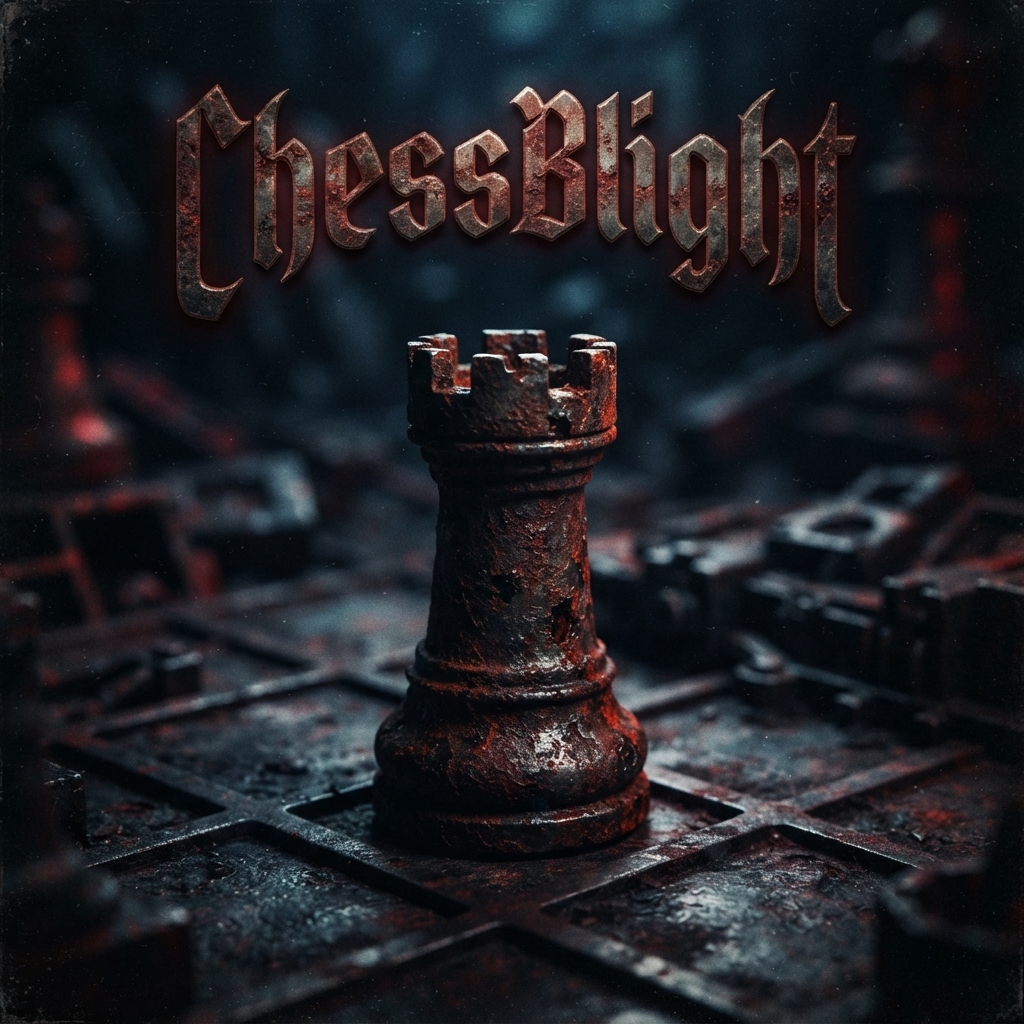
Blight is corrosion — the slow, creeping rust that consumes steel. It is a nod to the language the bot is written in: Rust. What looks like decay is actually persistence: corrosion never stops, and neither does this engine.
Blight is also the name of Andrea’s Magic: The Gathering deck — from a game he loves as deeply as chess. Two battlefields, one obsession with strategy.
Steel rusts, pieces fall, but the game goes on. Blight endures.
ChessBlight is a fully event-driven application: Lichess streams feed an async Rust core that pilots a dedicated Stockfish instance for every board.
One Stockfish process per game with persistent hash tables. Automatic reconnection with exponential backoff. Interrupted games are resumed on restart. Every parameter — depth, nodes, strength, chat, matchmaking — can be changed live, mid-game, without a restart.
Software developer, cybersecurity SOC analyst — passionate about chess and psychology.
ChessBlight is where Andrea’s worlds meet: the discipline of security operations, the logic of code, the beauty of the 64 squares and the psychology of every move.